Milestone Reward Thresholds Reshaping Tactical Adjustments in App-Based Card Sessions
Written by Elena Günther · Jun 29, 2026

Milestone Reward Thresholds Reshaping Tactical Adjustments in App-Based Card Sessions
App-based card sessions have incorporated milestone reward thresholds that trigger specific changes in how participants approach their play, and these systems operate across platforms offering blackjack and poker variants on handheld devices. Data indicates that reaching defined point accumulations unlocks tiered benefits such as enhanced table access or adjusted payout structures, which in turn prompt users to modify bet sizing and hand selection patterns during ongoing rounds.
How Threshold Systems Operate in Digital Card Environments
Platforms structure rewards around cumulative session metrics where players cross incremental targets like 500 points or 2,000 points, and these crossings activate mechanics that alter risk parameters within the same app session. Researchers have observed that such thresholds integrate directly with game algorithms so that bonus multipliers become available only after the milestone registers, leading participants to recalibrate their decision trees in real time rather than maintaining static strategies throughout an entire session.
According to reports compiled by the Alcohol and Gaming Commission of Ontario, mobile card applications registered increased frequency of mid-session strategy shifts in the first half of 2026, coinciding with expanded deployment of layered reward frameworks. Those frameworks connect point milestones to features such as reduced house edges on select tables or temporary access to private game lobbies, and players respond by extending session lengths or tightening variance exposure once the new parameters activate.
Adjustments Observed in Blackjack and Similar Table Formats
Blackjack sessions on apps demonstrate clear tactical pivots once milestone thresholds activate, and participants often increase minimum bet levels while simultaneously adopting more conservative splitting and doubling protocols to protect accumulated progress toward the next reward tier. Figures from industry tracking services reveal that average hand duration extends by measurable margins after a player unlocks enhanced reward status, because the altered payout ratios reward sustained participation over aggressive short-term plays.
One documented pattern shows users who reach the 1,500-point mark reallocating bankroll distribution across multiple concurrent tables, while those still approaching the threshold maintain single-table focus with smaller incremental wagers. This divergence emerges consistently across datasets collected through June 2026, when several major platforms rolled out synchronized milestone updates that synchronized reward triggers with live dealer integrations.
Poker Session Dynamics and Reward-Driven Shifts
Poker applications embed milestone thresholds that influence fold equity calculations and aggression frequencies, and crossing these markers frequently correlates with expanded use of position-based raises once premium table access unlocks. Observers note that players adjust pre-flop ranges upward after securing milestone bonuses because the associated rake reductions or loyalty multipliers improve expected value on marginal holdings that would otherwise remain folded.
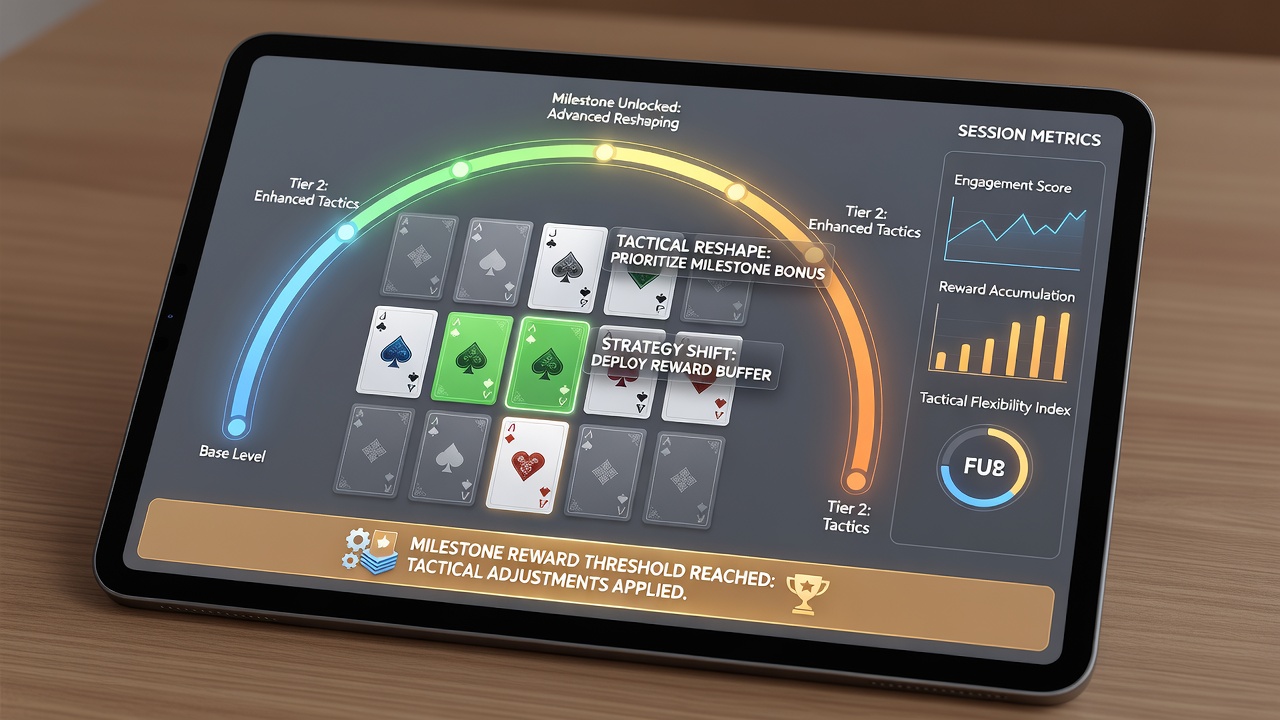
Studies compiled by the Australian Institute of Criminology highlight parallel trends in Oceania-based mobile poker ecosystems during the same period, where reward threshold crossings prompted measurable increases in three-bet frequencies among mid-tier accounts. These adjustments occur because the unlocked benefits offset variance exposure, allowing participants to pursue wider ranges without proportional risk escalation.
Platform Data Trends Through Mid-2026
Platform analytics from June 2026 indicate that sessions crossing at least two milestone thresholds within a single hour exhibit distinct bet-spread patterns compared with shorter or unrewarded play, and aggregate metrics show elevated retention rates once users unlock the associated status benefits. Such patterns hold across both casual and high-volume accounts, suggesting that the reward architecture itself functions as a structural variable shaping tactical choices rather than serving merely as an ancillary feature.
Those monitoring app telemetry report that threshold-triggered table migrations occur most frequently within the first fifteen minutes following reward activation, because users seek environments where the newly available mechanics deliver optimal return on the adjusted strategy set. This behavior aligns with broader industry reports that link cumulative reward progression directly to session extension and variance modulation choices.
Conclusion
Milestone reward thresholds continue to integrate more deeply with core card game mechanics on mobile platforms, producing measurable effects on how participants sequence their decisions and manage exposure across extended sessions. Evidence from regulatory and research sources demonstrates that these systems generate consistent tactical recalibrations once specific accumulation points register, and the resulting adjustments appear in both blackjack and poker environments. Continued monitoring through the latter half of 2026 will clarify whether these patterns stabilize or evolve alongside further platform refinements.