Tracing the Ripple Effects of Currency Fluctuations on Wagering Thresholds in Global Digital Entertainment Ecosystems
Written by Ulrich Jung · Jul 20, 2026

Tracing the Ripple Effects of Currency Fluctuations on Wagering Thresholds in Global Digital Entertainment Ecosystems
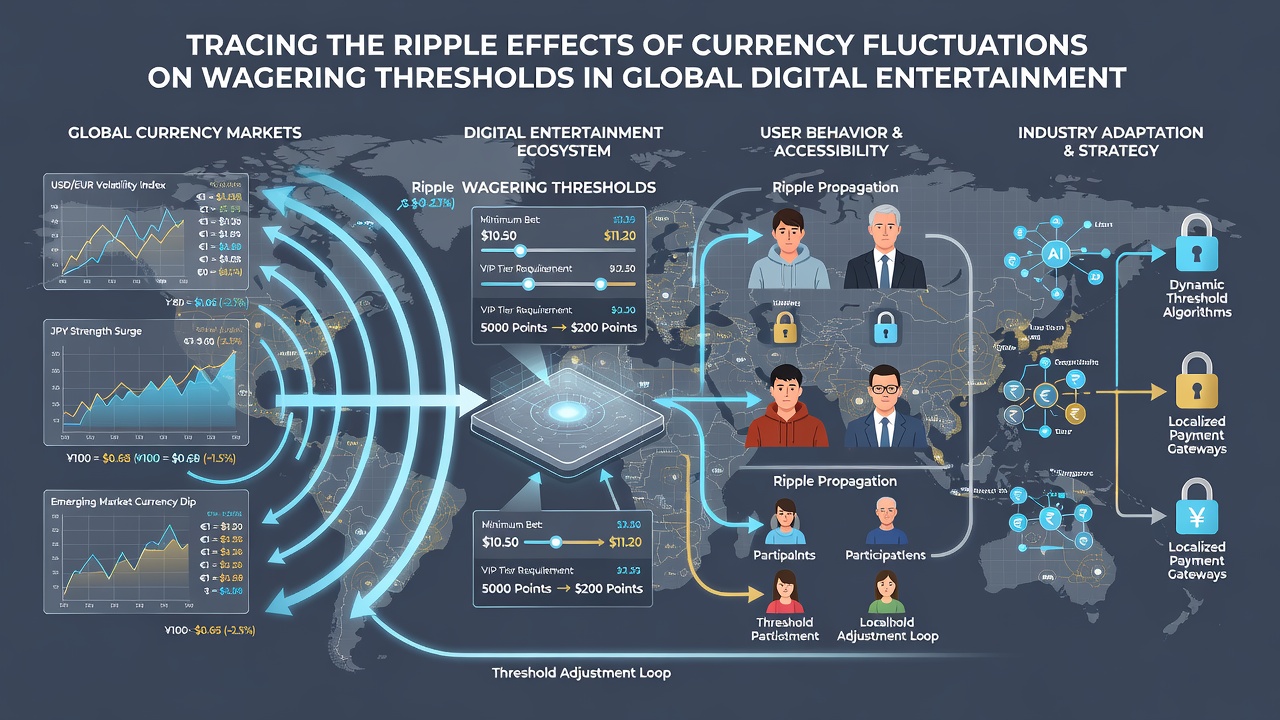
Currency movements create direct adjustments in minimum and maximum bet levels across online gaming platforms, and operators recalibrate these thresholds when exchange rates shift to maintain consistent revenue streams in their base currencies. Data from mid-2026 shows that platforms serving multiple regions track real-time forex feeds, and they apply automatic scaling to keep house edges stable while players encounter new entry points after each major rate change.
Mechanics of Threshold Adjustments
Digital entertainment providers maintain separate wagering bands for different currency pairs, and when the euro weakens against the dollar, platforms often raise euro-denominated minimums to offset the reduced value received after conversion. This process occurs through backend algorithms that pull daily closing rates from major exchanges, then apply percentage-based modifiers to every active table and slot title. Observers note that the same mechanism works in reverse, lowering thresholds when a local currency gains strength so that regional player bases do not face sudden barriers to entry.
Regional Variations in July 2026
During July 2026, several Asian currencies experienced notable swings that prompted immediate threshold revisions on platforms popular with users in Singapore, Malaysia, and South Korea. Operators handling SGD and KRW accounts adjusted progressive jackpot contributions and bonus eligibility tiers within forty-eight hours of each rate announcement. In contrast, platforms focused on Latin American markets held thresholds steady for longer periods because local central banks intervened to limit volatility in the Brazilian real and Mexican peso.
Those adjustments affect player progression systems as well, because loyalty points and VIP qualification requirements are typically denominated in the platform's reporting currency. A player depositing in a depreciating currency may reach the next tier faster in nominal terms, yet the actual value contributed remains aligned with the operator's risk model. Research from international financial institutions indicates that these synchronized changes help stabilize overall handle across volatile periods without requiring manual intervention on individual accounts.
Platform Responses and Compliance Layers
Global operators integrate currency risk modules directly into their compliance engines, and these systems flag any threshold change that might breach local regulatory caps on minimum bets. Canadian and Australian regulators require advance notification when thresholds move beyond set percentages, which forces platforms to maintain audit trails of every forex-driven update. The result is a layered approval process where automated adjustments receive secondary review before they appear in player-facing interfaces.
Payment processors also participate in the chain, because they convert incoming deposits at the prevailing rate before the funds reach the gaming wallet. When a major fluctuation occurs, processors sometimes apply temporary holds or rounded conversion rates that indirectly influence the final amount available for wagering. Platforms then recalibrate displayed thresholds to reflect the net effect on player balances, ensuring that advertised minimums remain accurate after settlement.
Player Behavior and Market Data
Session analytics from large aggregator networks reveal that players often pause activity for several hours after threshold updates, and they test new minimums with smaller deposits before committing to longer sessions. This pattern appears consistently across time zones, suggesting that the delay stems from users checking updated terms rather than from any change in game mechanics. Figures released by industry research groups show modest dips in average bet size immediately following adjustments, followed by recovery within one to two days as players adapt to the revised bands.
Multi-currency wallets further complicate the picture because users can switch base currencies mid-session on some platforms. When a player toggles from one denomination to another, the system recalculates all active wagers against the new rate, which can push an ongoing session across a threshold boundary without any additional action from the user. Developers have begun displaying real-time conversion previews to reduce friction during these switches.
Conclusion
Currency fluctuations continue to drive systematic recalibrations of wagering thresholds throughout global digital entertainment ecosystems, and the process relies on integrated data feeds, regulatory compliance checks, and player-facing transparency tools. July 2026 provided fresh examples of how regional rate movements translate into immediate operational changes, while market data indicates that both operators and users adapt within short timeframes once the revised thresholds appear. The underlying infrastructure remains focused on preserving revenue stability across borders without disrupting the core experience of digital play.